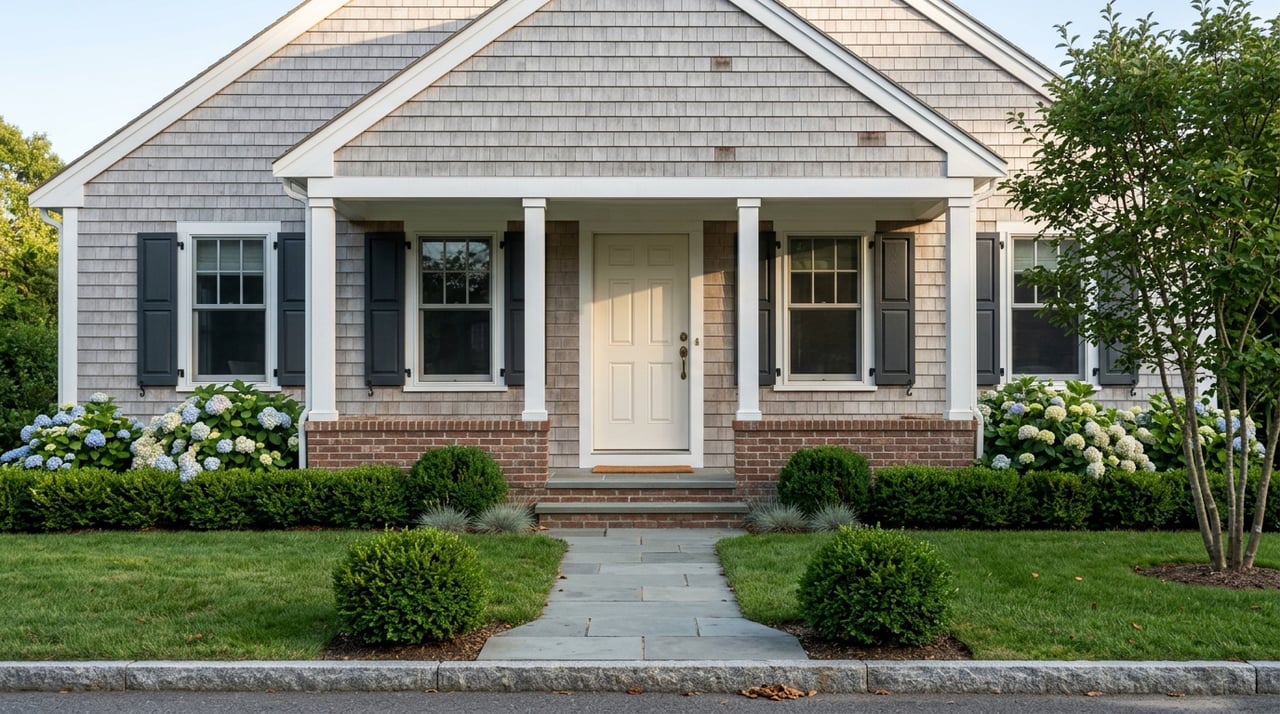
If you look at homes the way some people look at art, Amagansett rewards a slower read. This is a place where rooflines, porches, shingles, and the space between buildings all tell a story. Whether you are buying, selling, or simply trying to understand what gives a house its visual pull here, a design lens helps you see beyond finishes and into what truly holds value. Let’s dive in.
Why Amagansett Feels Distinct
Amagansett’s design identity comes from layers, not one single style. The Town of East Hampton identifies a rural historic district shaped by 18th- and 19th-century farmhouses, barns, community buildings, and commercial structures, along with later contexts like artist houses, studios, and modern architecture from 1930 to 1950.
That mix creates a local aesthetic that feels edited rather than overly polished. In the historic district, the goal is not to freeze houses in time. It is to keep the street-facing composition legible, with open front yards, traditional fences, and front facades that still read clearly from the road.
For you as a buyer or seller, that matters. In Amagansett, design value often comes from how well a home respects its setting while still adapting to modern life.
Reading Amagansett’s Main Home Styles
Historic Farmhouses and Village Houses
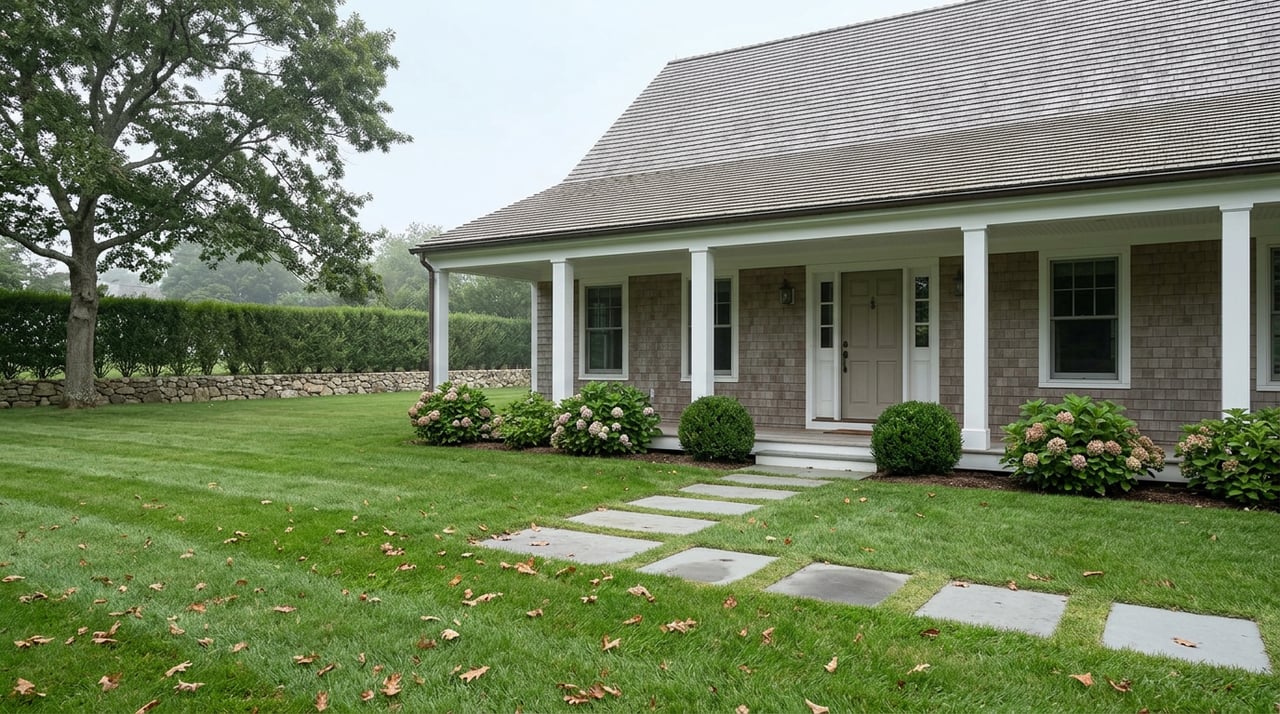
Older Amagansett homes tend to feel restrained rather than grand. The houses that stand out usually have simple massing, an intact roofline, original window openings, and a porch that still suits the scale of the structure.
This is where the phrase “good bones” actually means something specific. In Amagansett, it often points to a house that still sits comfortably in its yard, with a believable relationship between the home, the front facade, and the surrounding open space.
Historic examples in town show that change is part of the story. Homes have evolved over time with porch additions and updates, yet they still retain early materials and proportions that keep their character intact.
Shingle Style and Coastal Vernacular
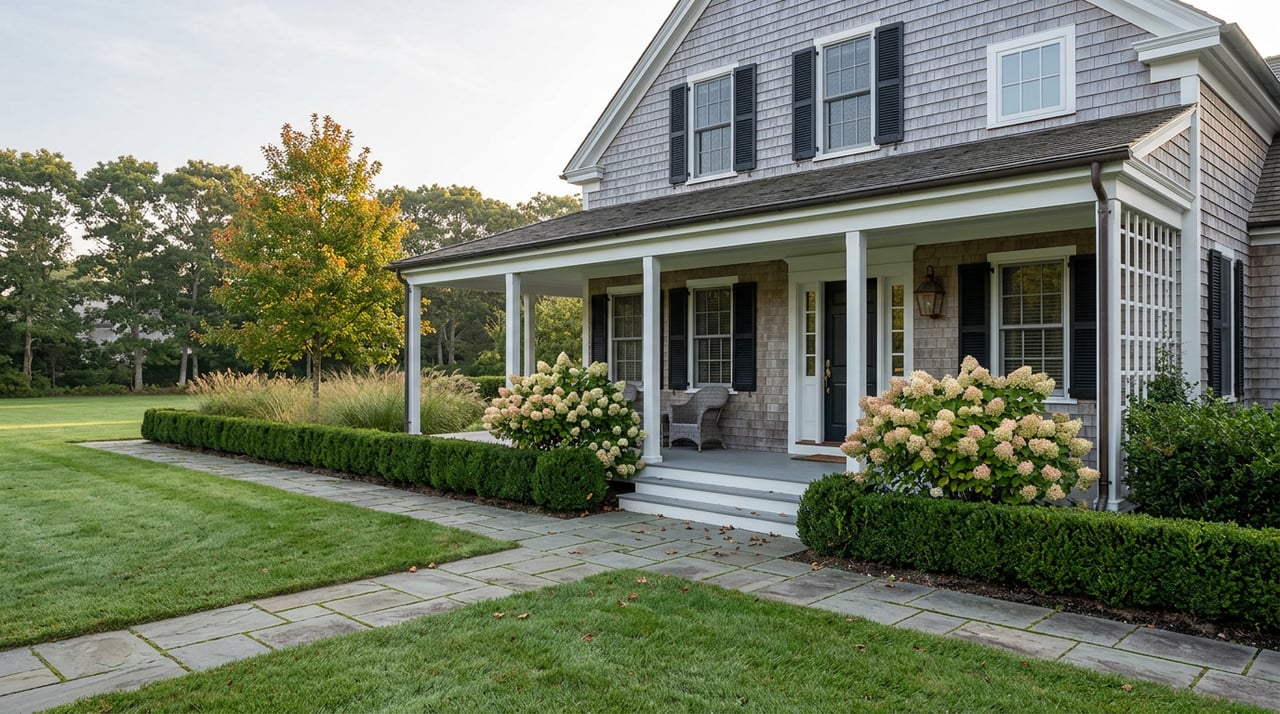
If there is a visual shorthand for the Hamptons, it is often Shingle Style. National Park Service descriptions point to irregular massing, interlocking roof forms, porches, broad verandas, and shingles that unify the exterior.
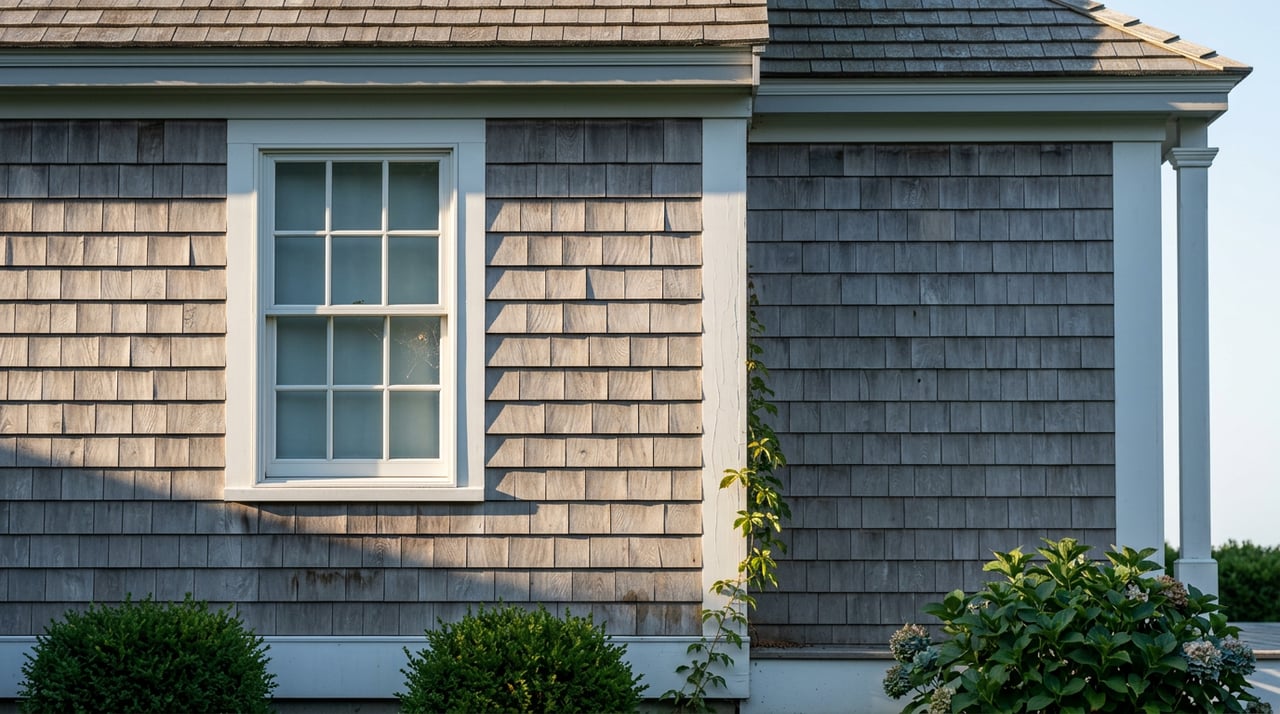
In Amagansett, that language feels especially natural. The district guidelines note that natural shingle siding and white-painted exteriors predominate, while ornament tends to stay restrained.
The result is a coastal architecture that feels soft, durable, and grounded in material rather than decoration. Wood, proportion, and silhouette do much of the work.
Modern Oceanfront Retreats
Contemporary Amagansett homes often move in a different direction, but they still reflect the setting. Published oceanfront projects lean on cedar, glass, stone, cypress, bluestone, steel, and aluminum, with layouts shaped by light and views.
These homes usually trade ornament for contrast and clarity. You may see expansive glazing, an upside-down floor plan that places living areas upstairs, or a quieter interior palette that lets the architecture and landscape take the lead.
Even in a modern home, the strongest designs here tend to feel calm rather than flashy. The best ones are confident enough to let material, scale, and site do the talking.
What Design Lovers Mean by “Good Bones”
In many markets, “good bones” can be vague. In Amagansett, it is often much easier to define.
A home with good bones usually includes:
- A strong street-facing facade
- Original or well-preserved window openings
- A roofline that still reads clearly
- A porch that fits the home’s proportions
- A house-to-yard relationship that feels natural
- Space for traditional elements like fencing, outbuildings, or open front yard areas
These features matter because local preservation guidance places real value on legible forms and preserved front-facing character. A house does not need to be untouched. It just needs to remain coherent.
What Thoughtful Updates Look Like
Compatibility Over Imitation
One of the most helpful ideas in the Town of East Hampton guidelines is that contemporary work should be compatible with historic buildings without copying them. That is an important distinction if you love design.
A thoughtful renovation does not force a false historic look. Instead, it relates to existing forms, materials, and details in a way that feels respectful and visually calm.
Rear and Side Additions
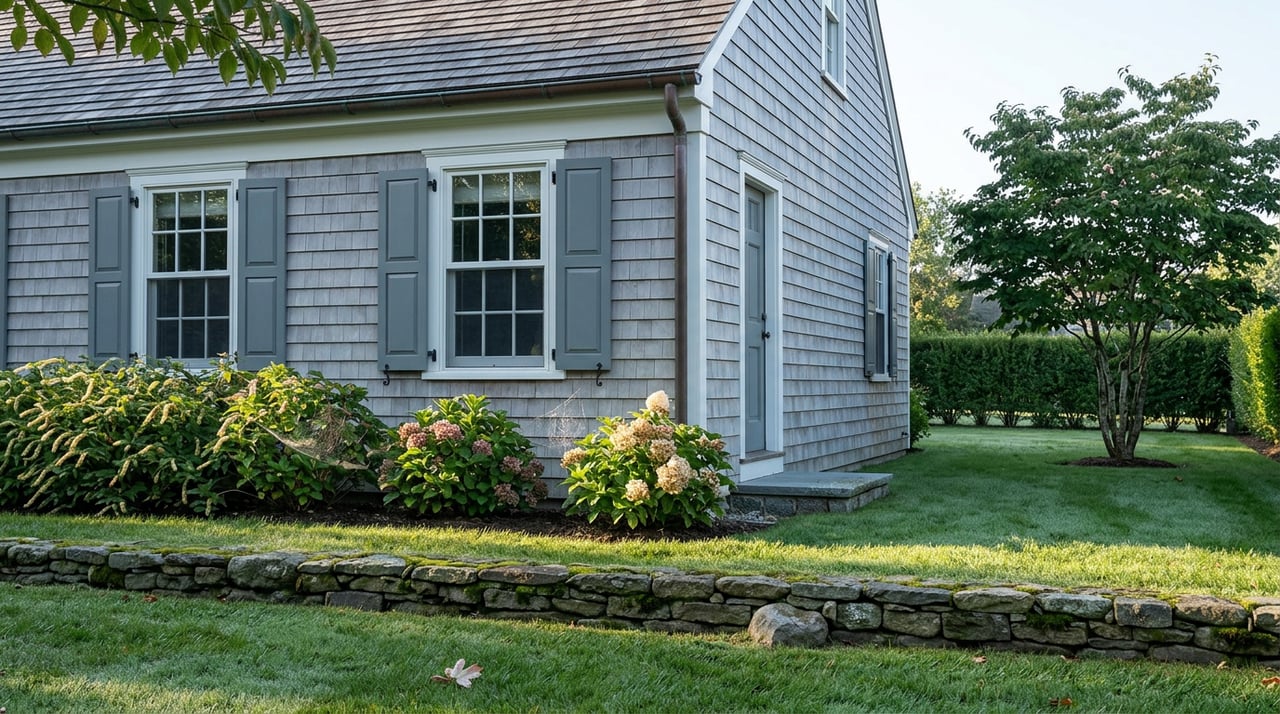
In practical terms, many of the best updates happen behind the original house. The guidelines support additions on rear walls and, where appropriate, side walls, which allows a home to grow without overwhelming its front facade.
That is often why the most successful Amagansett houses feel so balanced. From the street, they still hold onto their scale and rhythm. Inside and at the rear, they can offer the openness and function that modern buyers want.
Material Continuity Indoors and Out
Published Amagansett homes show a clear pattern inside. Rather than leaning into obvious nautical themes, many of the most compelling interiors use warmth, texture, and a restrained material palette.
Cedar, cypress, bluestone, white oak, and walnut appear repeatedly. Beige and gray tones, sculptural furnishings, and natural finishes create rooms that feel inviting without competing with the architecture.
If you are evaluating a listing, look for continuity. When exterior materials and interior finishes speak the same language, a home often feels more settled and complete.
How Village Homes and Oceanfront Homes Differ
Village and Historic-District Homes
Homes in and around the village often feel more agrarian in spirit. Their appeal tends to come from smaller scale, open yard relationships, porch rhythm, and shingle-driven simplicity.
What makes these homes special is often their composure. They belong to the street, the yard, and the wider historic pattern around them.
Oceanfront Retreats
Oceanfront homes usually tell a different design story. They are more likely to be view-forward, with larger expanses of glass, stronger indoor-outdoor connections, and plans organized around light, weather, and the horizon.
This does not make one better than the other. It simply means that in Amagansett, design-minded buyers often choose between two very different but equally compelling forms of beauty: village restraint or coastal openness.
A Practical Design Vocabulary for Listings
When you read listing language in Amagansett, a few terms are especially useful.
Massing
Massing is the overall shape of the house. Historic homes often feel strongest when the front-facing form remains clear, while shingle-style homes may use more irregular compositions.
Fenestration
Fenestration refers to the window layout. Original openings, sash proportions, and upper-floor placement can tell you a great deal about whether a house still holds its architectural integrity.
Open Setting
Open setting means the relationship between the home, the yard, and neighboring buildings. In Amagansett, open front yards, traditional fences, and spacing between structures are part of the area’s rural character.
Material Continuity
This describes a repeated palette across the house. In Amagansett, that often means wood and stone materials such as cedar, cypress, bluestone, white oak, and walnut.
View-Driven Planning
Oceanfront homes often organize living spaces around outlook and light. That may mean placing primary gathering areas upstairs or using large areas of glazing to capture the setting.
Resilience Cues
Because coastal hazards can include storm surge, waves, and erosion, design details may also reflect durability. Elevated structures, anchored construction, impact-rated glass, simple roof forms, and weathering materials can all be cues that a home was designed with coastal conditions in mind.
What This Means for Buyers and Sellers
If you are buying in Amagansett, a design lens can help you sort lasting value from surface appeal. A beautifully styled house may catch your eye, but the deeper question is whether its proportions, materials, facade, and site relationship feel coherent.
If you are selling, these same details shape how your home should be presented. Design-minded buyers respond to story, composition, and authenticity. They want to understand not just what the home includes, but why it feels right in Amagansett.
That is where thoughtful positioning matters. The strongest marketing for this market does more than list features. It frames the architecture, setting, and updates in a way that helps the right buyer recognize value.
If you are considering a move in Amagansett and want guidance shaped by both market knowledge and design perspective, CeeJack Team offers a curated, place-aware approach to buying and selling across the East End.
FAQs
What defines good bones in an Amagansett home?
- Good bones in an Amagansett home usually mean a clear street-facing facade, original or well-preserved window openings, an intact roofline, a porch that fits the scale of the house, and a natural relationship between the home and its yard.
What makes a renovation feel thoughtful in Amagansett?
- A thoughtful Amagansett renovation uses compatible materials, keeps new work visually subordinate, and places larger additions to the rear or side so the original front-facing character remains legible.
What is the difference between Amagansett village homes and oceanfront homes?
- Amagansett village homes often feel smaller in scale and more rooted in agrarian or shingle-style traditions, while oceanfront homes are more likely to use glass, cedar, and view-driven layouts shaped by light and the landscape.
What design materials show up often in Amagansett homes?
- Repeated materials in Amagansett homes include cedar, cypress, bluestone, white oak, and walnut, often used in a restrained palette that creates warmth and continuity.
What does fenestration mean when reading an Amagansett listing?
- In an Amagansett listing, fenestration refers to the placement and proportions of windows, which can be an important clue to a home’s architectural integrity and how well updates respect the original design.
Why do resilience features matter in Amagansett oceanfront homes?
- Resilience features matter in Amagansett oceanfront homes because coastal conditions can include storm surge, waves, and erosion, so elevated structures, anchored construction, impact-rated glass, and durable materials can be important design cues.